Nachtsprung Zürich 2040: Why Switzerland is Leading the Future of Night Travel in Europe The City of Zurich and Zurich Tourism have published a groundbreaking study — and it shows: Night travel is not nostalgia, but the future of European travel.
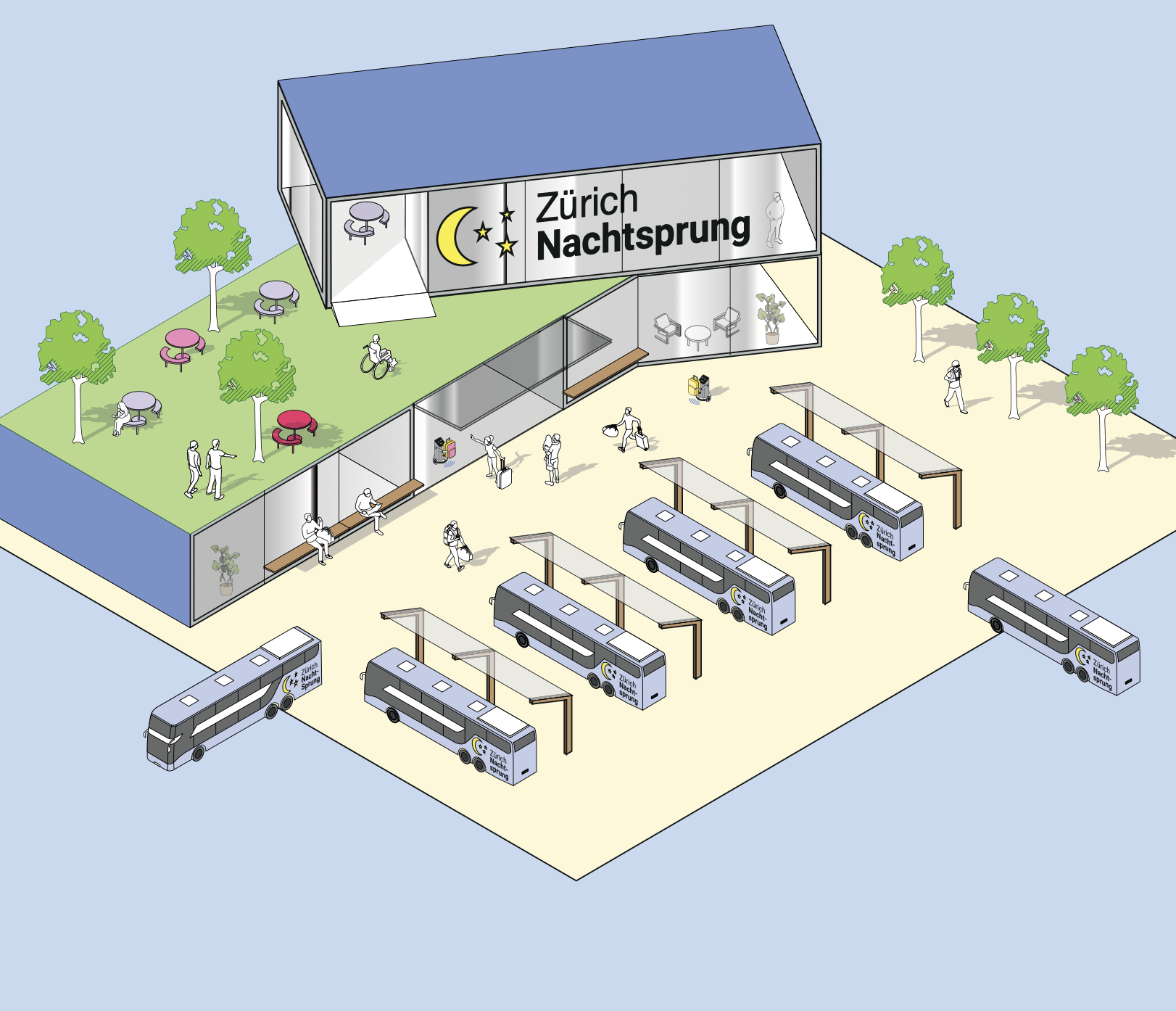
In January 2026, the City of Zurich's Environmental and Health Protection (UGZ) and Zurich Tourism jointly published the study "Nachtsprung Zurich 2040". The goal: to establish Zurich as a central hub in a Europe-wide Nachtsprung network — thereby simultaneously achieving climate policy goals and boosting the city's tourist appeal.
The study is based on a multi-stage process involving 48 experts from the fields of tourism, mobility, sustainability, politics, and placemaking. Their findings: ten concrete strategic potentials that show how the vision of a Europe-wide Nachtsprung network can become a reality.
Two figures from the study highlight the urgency:
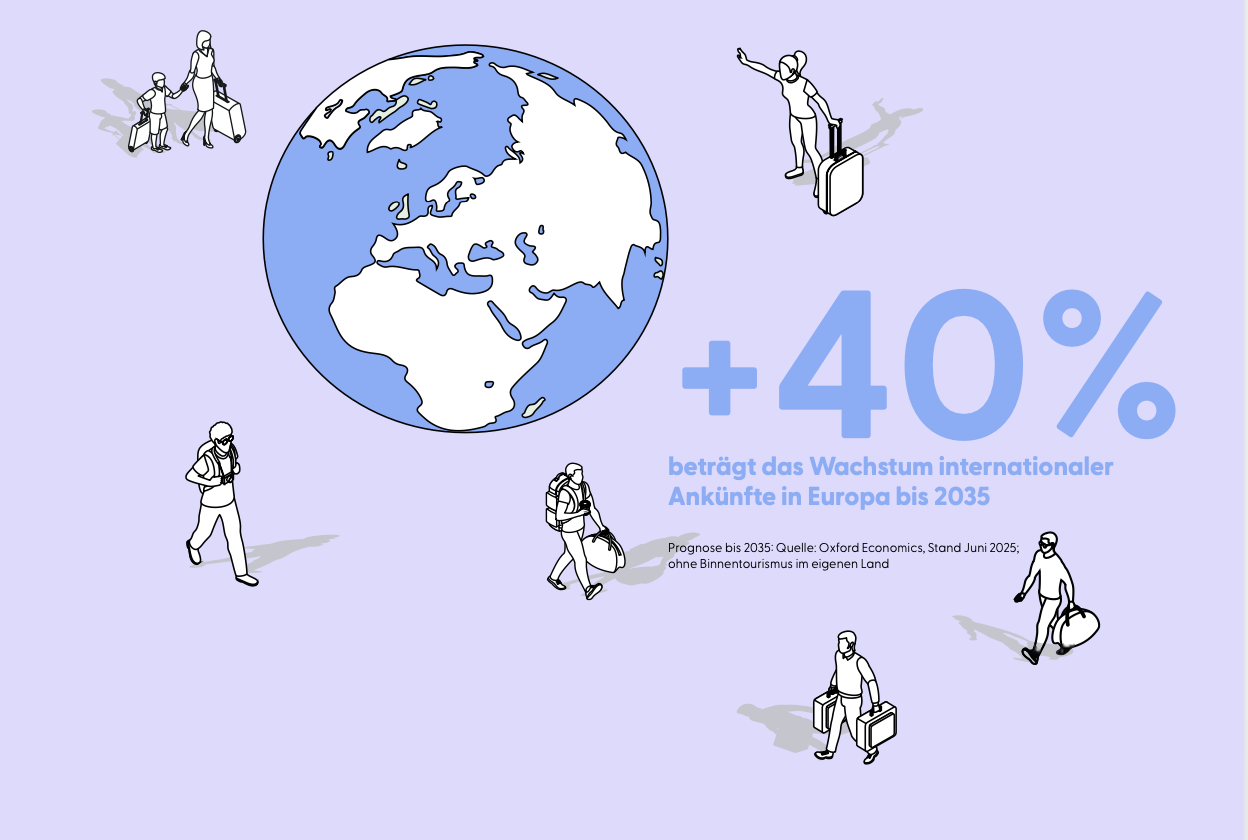
International tourism in Europe is projected to grow by 40% (Source: Oxford Economics, June 2025). Without genuine alternatives to flying, this means: more CO₂, more congestion at airports, more pressure on urban infrastructure.
At the same time, surveys show: 62% of the Swiss population would travel by night train — if the service is right. The willingness is already present. What's missing is a dense, comfortable, and easily bookable night travel network.
Travel is one of the largest personal sources of CO₂ — and flying is by far the most climate-damaging mode of transport. The Nachtsprung study states: The CO₂ footprint of night buses and night trains is approximately 10 to 20 times smaller than by plane.
For Twiliner, this figure was independently verified by myclimate: A Twiliner journey causes up to 91% fewer CO₂ emissions than a comparable flight. This means ten Twiliner journeys have the same footprint as a single flight.
René Estermann, Director of Environmental and Health Protection for the City of Zurich, sums it up: The "Nachtsprung" initiative is a building block of the city's climate strategy — and a call to action.
A key finding of the study: Night buses and night trains are not competitors but complement each other perfectly. Night trains efficiently connect major European centers on main routes. Night buses cover the wider area — destinations where demand isn't sufficient for a dedicated train connection, but which should still be accessible at night.
The decisive advantage of the night bus: It is quickly scalable. It requires no rail infrastructure, no track slots, and can react flexibly to seasonal fluctuations. With acquisition costs of around CHF 750,000 per vehicle, it is significantly cheaper than rail vehicles — and is currently operated profitably without government subsidies.


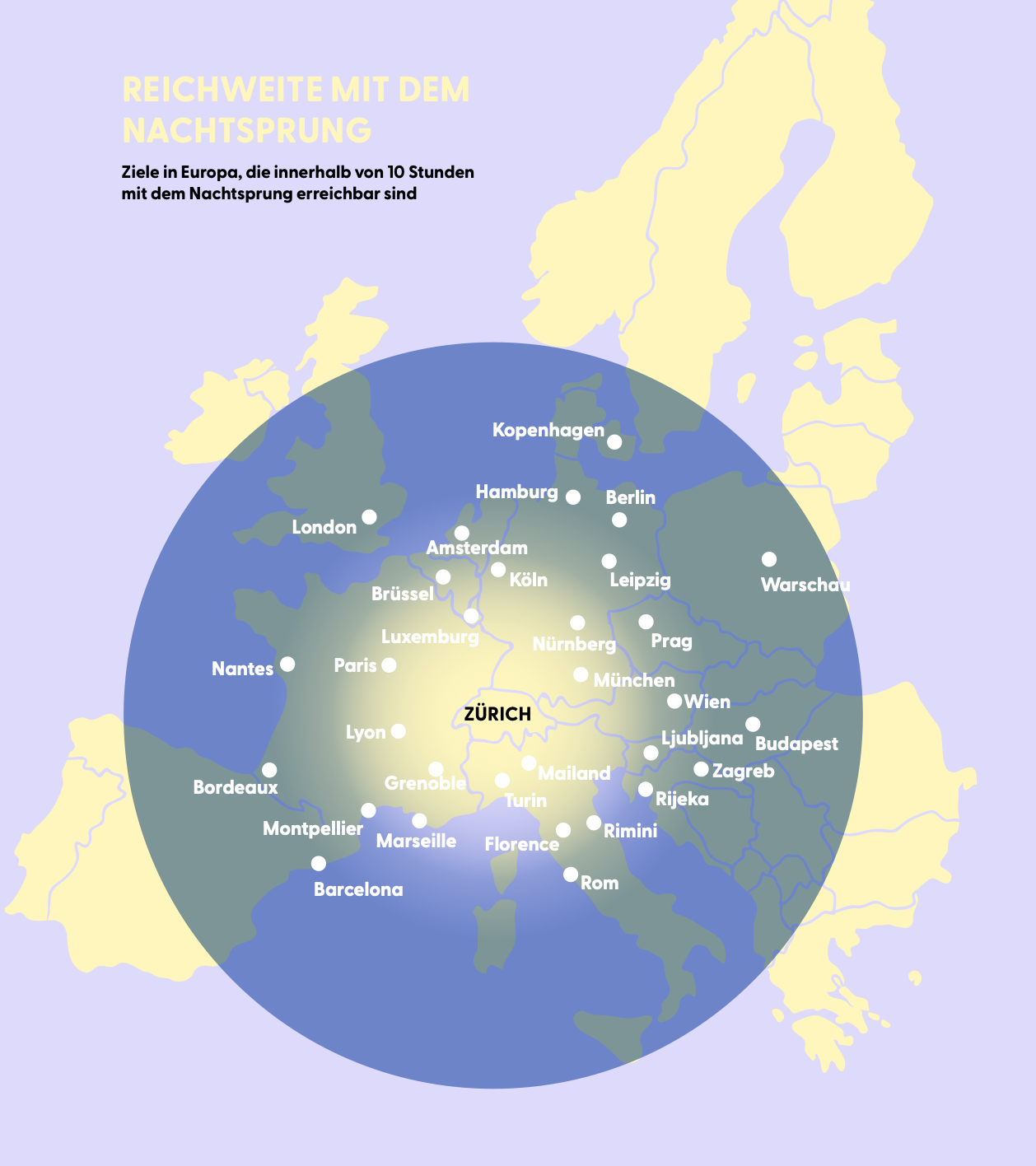
Switzerland's central location makes Zurich the ideal hub for a Europe-wide overnight travel network. From Zurich, large parts of Europe are reachable within ten hours via overnight transport — from Amsterdam to Barcelona, from Paris to Vienna.
Thomas Wüthrich, Director of Zurich Tourism, sees a strategic opportunity in this: "Overnight travel offers enormous potential for our city. It opens up new target groups and creates space for innovative travel experiences. Our central location in the heart of Europe positions us as the hub for a modern overnight travel network."
The study's vision is clear: By 2040, overnight travel should be an integral part of the European mobility system. Travelers will book overnight buses and night trains just as easily as a flight ticket today — with a comparison of travel time, comfort, price, and CO₂ footprint at a glance.
For travelers today, this means: Those who travel with Twiliner now not only arrive earlier at their destination city. They are part of a movement that is fundamentally rethinking travel in Europe.
Sources: Nachtsprung Zurich 2040, Environmental and Health Protection of the City of Zurich / Zurich Tourism, January 2026. Oxford Economics, as of June 2025. myclimate Impact Analysis, Twiliner AG, March 2024.